
:format(webp))
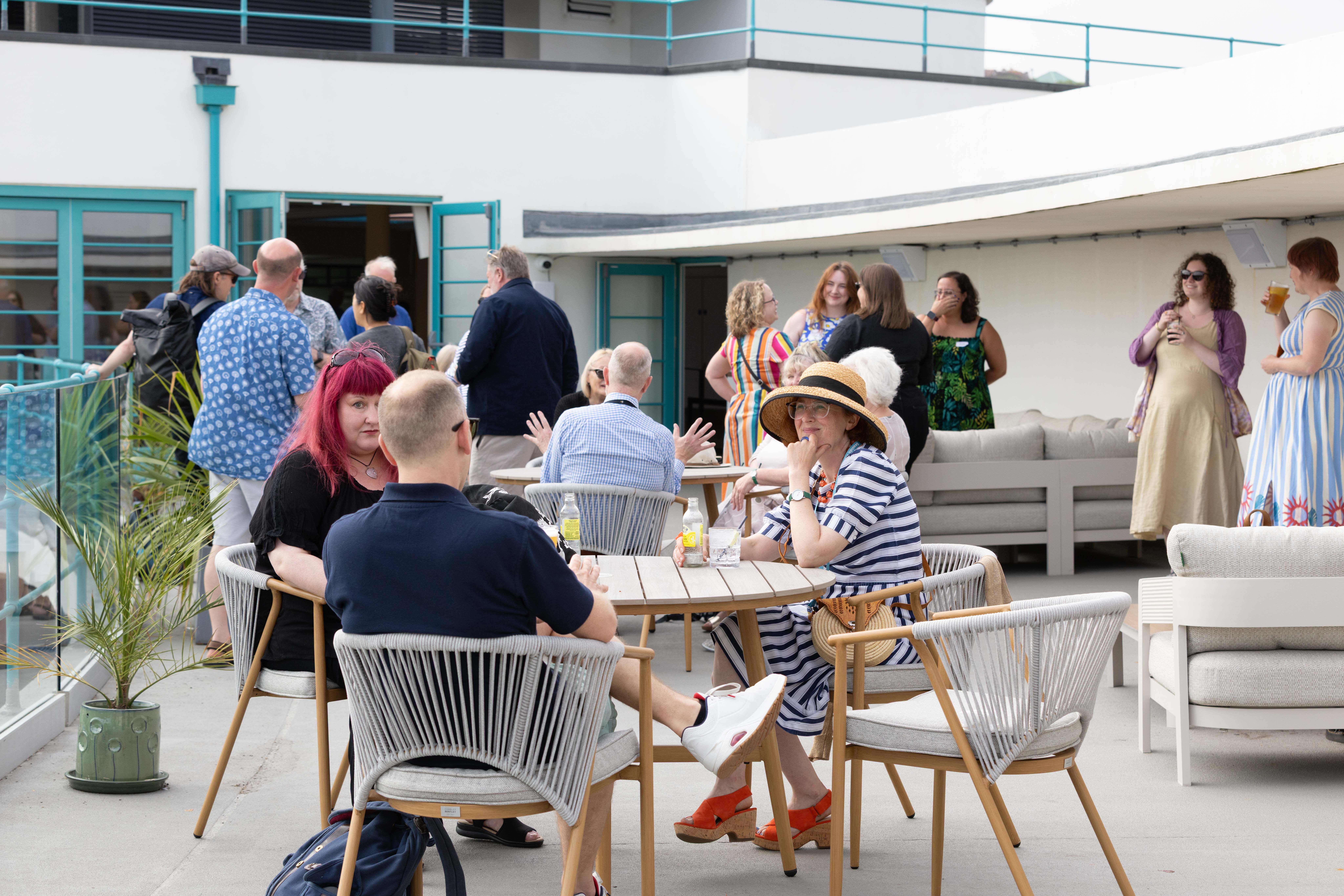
In June 2026, the Heritage Network teamed up with the Seaside Heritage Network and Historic Buildings and Places to bring more together than 100 people working on seaside heritage in an event at Saltdean Lido, Brighton. Together, we held two days of talks, tours, and networking opportunities for people to swap advice, gather inspiration, and forge new partnerships.
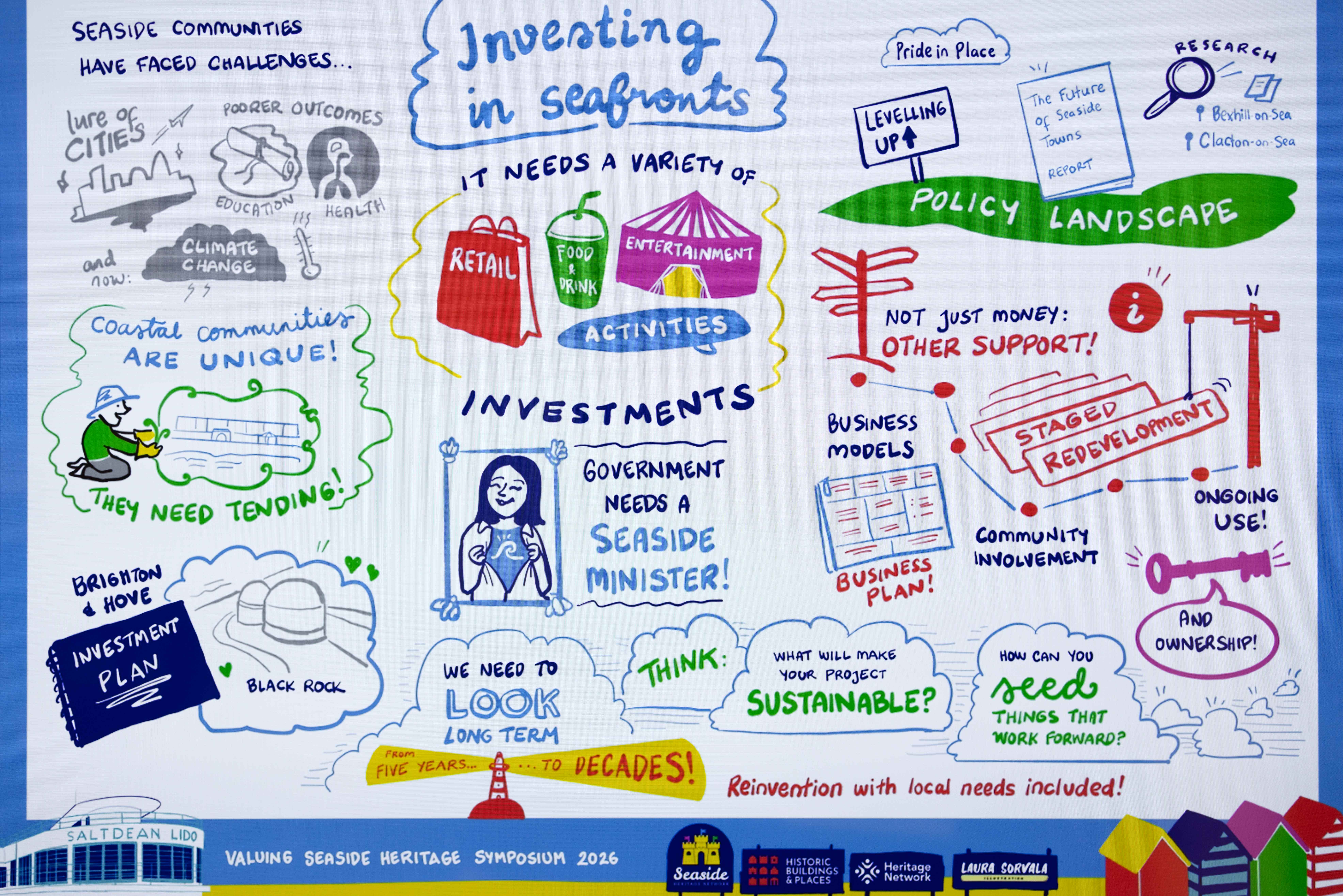
In this post, we’ll share some of the advice, insights, and examples from this event. You can also see a visual representation of the day, created by our wonderful on-site illustrator Laura Sorvala.
Who the Heritage Network are
The Heritage Network is the UK’s sector support organisation for people rescuing, reusing, and managing heritage for community benefit. We are a charity – you might have known us by our previous name the Heritage Trust Network - and we help other charities, trusts, social enterprises, local authorities, and other types of not-for-profit reuse historic assets of all shapes and sizes. At the seaside, this includes members of ours working on winter gardens, lidos, cinemas, cliff lifts, beach shelters and more.
The Heritage Network is primarily a Network – we are more than 1000 people all working on similar projects who come together to share advice, insights, and a shoulder to lean on. We also run a series of events, training programmes, 1:1 support, an annual conference, capacity building programmes, and much more right across the UK.
How To Save Our Seaside Heritage
Saving historic buildings and making them fit for the future isn’t always straightforward, but helping you achieve this is exactly what the Heritage Network is here for. There’s lots of advice we can share, and below we’ve focused on three member organisations of the Heritage Network who gave a talk at the Valuing Seaside Heritage symposium, and what we think you can learn from them.
Grim and Gleeful CIC - Cleethorpes
Grim and Gleeful CIC in Cleethorpes are a great example of how communities can come together to harness heritage and activate historic places. They describe themselves as a 'locally rooted, creative company delivering joyful, place-based arts across Greater Grimsby and Cleethorpes' - in particular theatre, music, storytelling, and cultural events.
Thanks to a grant from the Create North East Lincolnshire Hidden Stories programme, Grim and Gleeful have been carrying out a new project to uncover the rich history of the former Empire Theatre in Cleethorpes. The Empire was built in 1896 and celebrates its 130th birthday in 2026, though it no longer operates as a theatre. Working with local people, Grim and Gleeful are collecting stories, memories, memorabilia, and more to create a short film about the Empire and its role at the seaside. They hope to raise ambitions locally for a theatre to be reinstated in the town in the future.
Grim and Gleeful also run a local network called Cleethorpes Promenados, which brings people together and hosts talks, salons, performances and get-togethers. The Promenados try to come together in historic buildings in the area, raising their profile and supporting them in turn. They are committed to honouring Cleethorpes' seaside heritage, but also look outwards and to the future.
Rooted in Cleethorpes, open to the world!Stuart Wood, co-founder, Grim and Gleeful CIC
Grim and Gleeful are a fantastic example of how projects can emerge when a small group of passionate people come together, and also how you might use creativity and arts to inject new energy into people and places. Think broadly and know that momentum grows as people get more involved.
Heritage Lab - Ramsgate
Saving heritage doesn’t always mean keeping things exactly as they are. To make our seaside heritage relevant and resilient in the 21st century, we often need to rethink a site or structure’s original use and consider how it might be repurposed to better serve communities today. This is called ‘adaptive reuse’.
In Ramsgate, a not-for-profit ‘Heritage Development Trust’ called Heritage Lab have successfully turned a former wine warehouse close to the harbour into a performance venue, co-working space, and coffee shop. The Victorian warehouse had stood vacant for a decade and needed a new lease of life. As well as changing its use, the building required roof repairs, upgrades to electrics, plumbing, heating and ventilation systems, and new fittings.
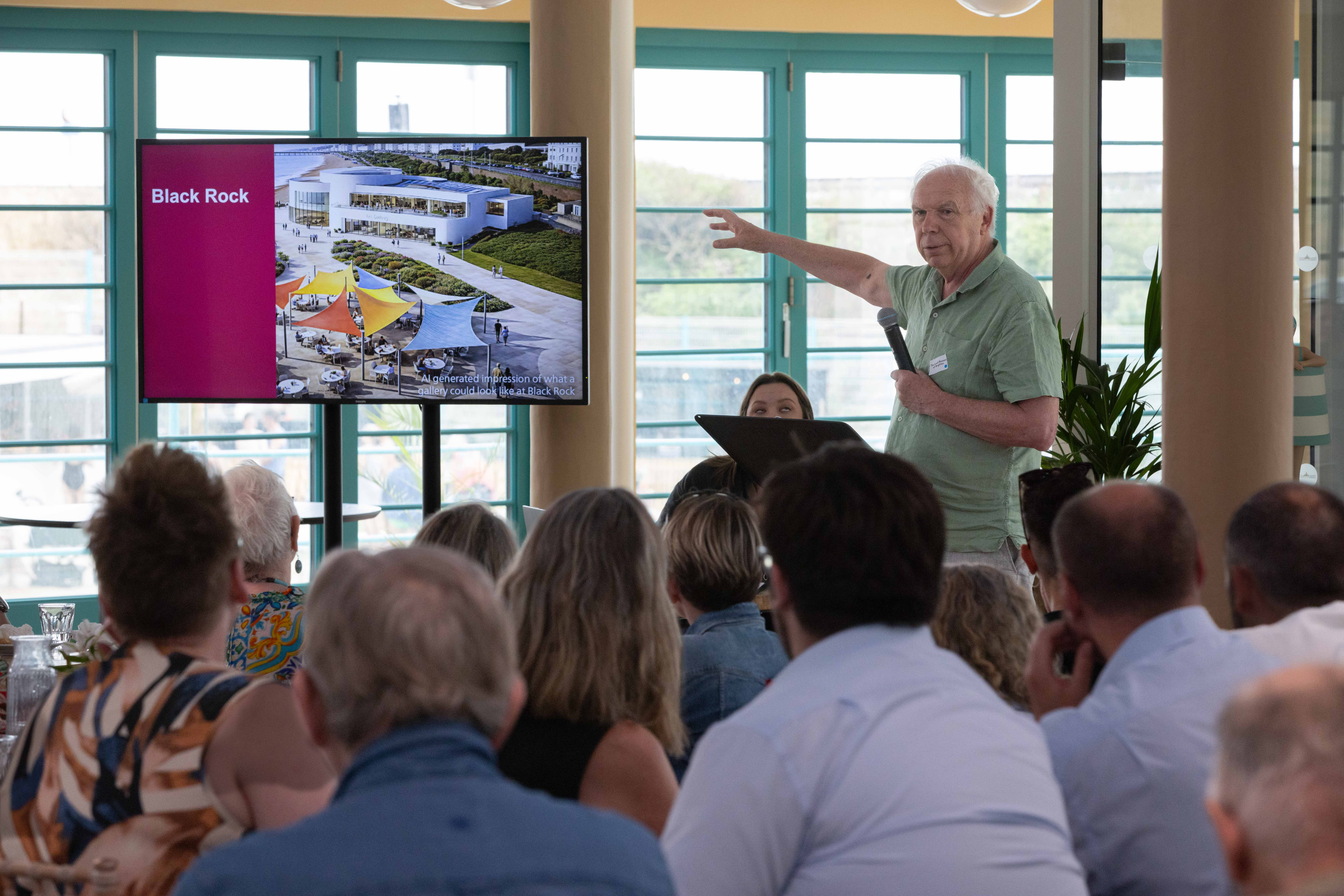
At our event at Saltdean Lido, Rob Kenyon, CEO of Heritage Lab, talked about how important partnerships are to delivering successful reuse projects, as well as starting small with building projects and building confidence over time. Now, Heritage Lab have turned their attention to breathing ‘a new lease of life’ into eight Art Deco shelters on Ramsgate’s East Cliff.
At the Heritage Network, we know that funding the right reuse for a heritage building requires careful consideration and thorough research. We know that a good ‘viability study’ matters a lot. Funders like the Architectural Heritage Fund (AHF) offer dedicated grant funding to help not-for-profits develop and explore ideas for reusing vacant space in historic buildings. In Ramsgate, Heritage Lab have been using funding from the AHF to explore what the local community would like to see in those eight Art Deco cliff shelters, and then to test which ideas could work in the long-term. The options being explored include food and drink units, beach huts, a sauna, and arts spaces, water sports, and fishing facilities.
Selsey Pavillion – West Sussex
Sometimes, however, seaside heritage is still fit for purpose – but it needs a lot of love and care to bring it back into use for the community. In 2025, Selsey Pavillion Trust celebrated bringing cinema back to the Selsey Pavillion for the first time in fifty years.
Since the early 1900s, Selsey Pavillion served residents and tourists alike as a year-round entertainment destination presenting shows, films, dinners and dances. It closed in 1974 and was used as a parking facility before eventually becoming vacant and highly ‘at risk’. Luckily in 2024, after many years of hard work, planning, and fundraising, a community organisation called the Selsey Pavillion Trust purchased the building, set on securing its restoration and revival.
At our event in Saltdean, Christian Skelton who is the Chair of the Trust, talked to us about how restoration can be a long and slow process. It often takes many years to find the right people to form a board of trustees, find the right structure for a not-for-profit organisation, consult with the local community, survey a building, and fundraise for its repair and renovation. If you've never dealt with the world of heritage regeneration before, there can be an extra layer of complexity as your team of volunteers gets to grips with a load of new language and processes.
At the Heritage Network we put lots of time and effort into helping exactly these types of community groups learn about heritage processes and introduce them to the right people. We're experts in our field but we know what it's like to take on a project and start from scratch. We're here to share knowledge and help people identify the best next steps for them.
In 2025, members of the Selsey Pavillion Trust talked to our filmmakers about the journey of rescuing Selsey Paviillion and how the Heritage Network has helped them. You can watch the video on our YouTube channel:
